Not many formats of media have had bumpier transitions to the digital age than the monthly comic book. Falling from its status as a hallmark of every gas-station, news-stand, and kid’s bedroom to the industry’s current position as a niche hobby only catered to by specialty stores, the modern-day comic-book business’s success is precarious at best – largely relying on ‘brand-names’ of established characters to draw the majority of publisher’s sales.
While the current shut-down of Diamond Distribution – the company monopolizing distribution in American comics – due to COVID-19 will surely have major impacts going forward in the industry, this is also by no means the only ‘revolution’ or ‘crisis’ that comics have dealt with in the past twenty years. Whether it be fans claiming eBooks, crowd-funding, or graphic novel placements in conventional bookstores to be the next big step for the industry, talk of change is a constant in comic circles. All that said, the fact the decades-old, serialized monthly format is still reigning supreme distribution-wise is a testament to both these publishers’ quality and stubbornness. While technology and reading habits shift rapidly, the ‘big-two’ comic publishers, Marvel and DC, dig their feet into the ground, maintaining their old habits.
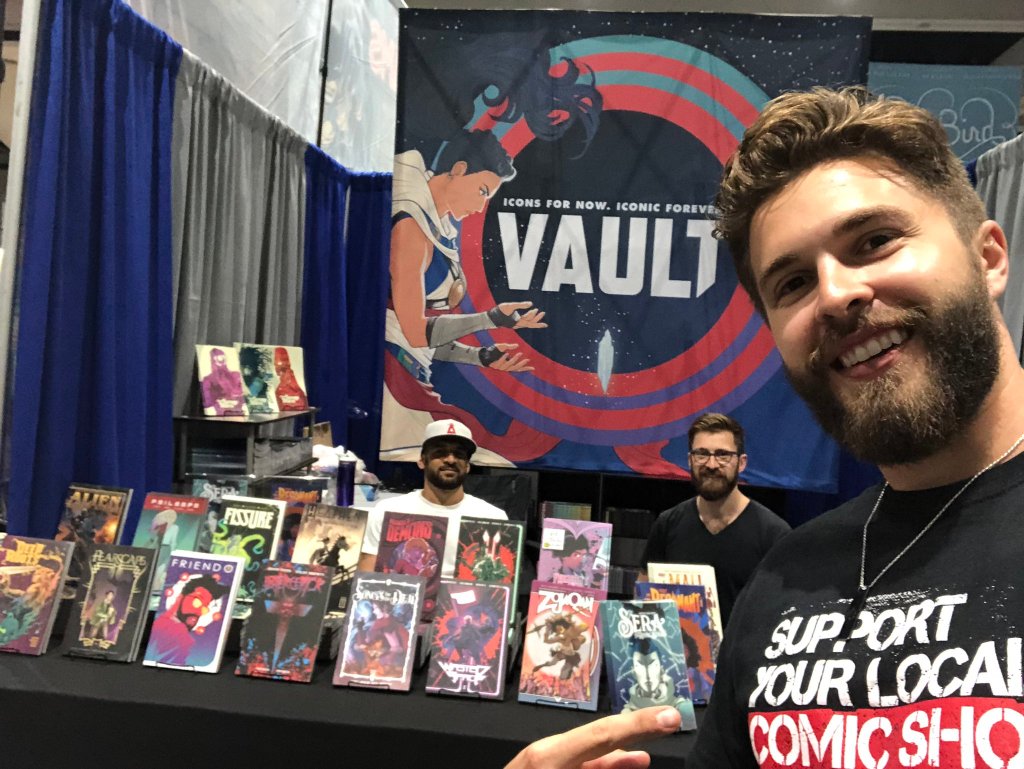
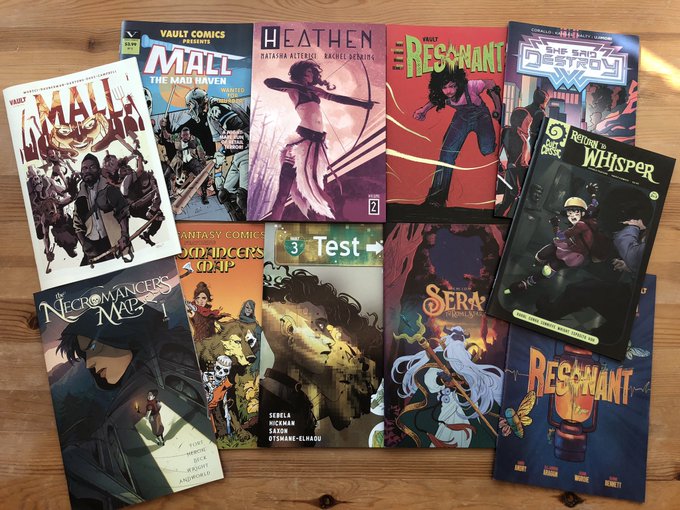
But one aspect of the comic industry that’s relatively unique – and surely a factor in its continued existence, despite everything – is the small-but-loud presence of a middle-ground publishing/distribution wise. Not quite DIY-style indie books, but not mainstream by any means – a medium-press, if you will. These publishers today, including names like Aftershock, Vault, and Black Mask Comics serve as a breeding ground for hot talent, a genre-fiction underground, and year after year are publishing more of the most critically-acclaimed comics on shelves. Taking a lot of inspiration from the original adult-comics wave with Image, Dark Horse, and Vertigo in the ‘90s, these publishers are the latest in a long line of boundary-pushers in the industry. Both in the past and in the current movement, writers and artists who succeed at the creator-owned level have gone on to be major tastemakers throughout comics. Long superhero runs and Image Comics imprints could very well be in the future for the creators who set themselves apart at the ‘medium-press’ level.
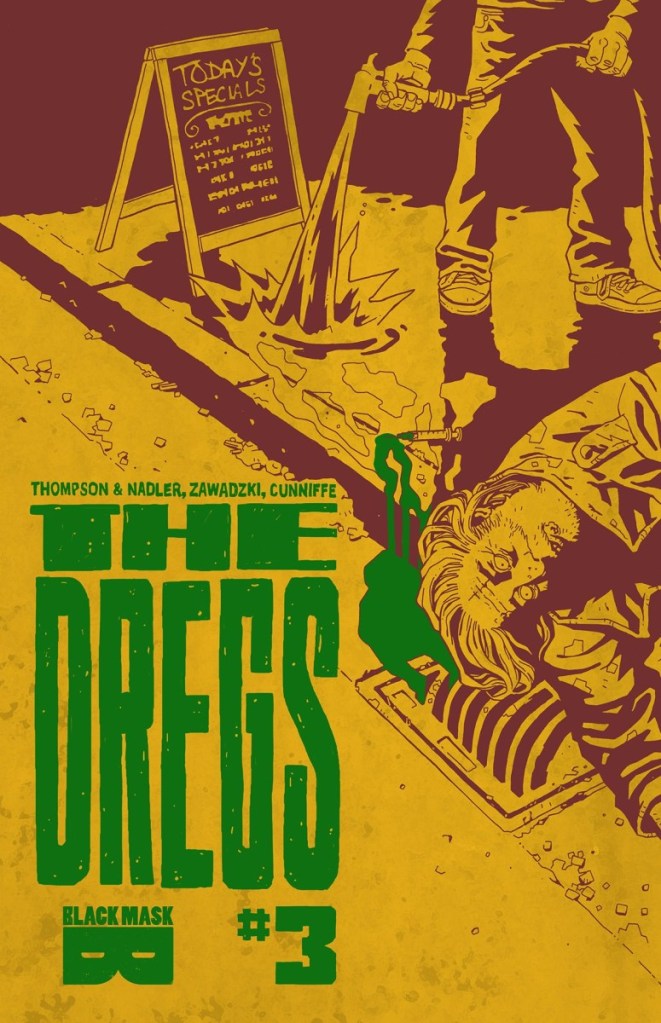
I’d argue that the ‘medium-press’ of creator-owned comics is the best and healthiest thing the comics industry has going for it, and its success means success for the industry as a whole. To discuss some of these ideas, I’ve brought in an ‘inside’ man – a writer who has worked with all of these publishers throughout his still-young career in the comics game. Currently writing, among many projects, Undone in Blood for Aftershock Comics – and with a resume including The Dregs for Black Mask, Black Stars Above for Vault Comics, and Yondu for Marvel – is Lonnie Nadler, who was nice enough to take the time and talk a little about his experience in this side of the industry.
The interview below has been edited for clarity, flow, and length.
Publishers like Vault, Aftershock, and Black Mask have all popped up relatively recently and achieved high levels of success – is there any specific reason you think why? Are these guys any more creator or consumer-friendly than some of the other companies that maybe haven’t done as well?
LN: Because they are run by people who love comics and who are invested in making exciting new stories for the next generation of readers. I’ve worked for all three and they’ve all offered me freedom in my writing that I’ve come to value more than anything else.
A lot of your work – Black Stars Above and The Dregs come to mind – are really cool, wordy comics that I think do a great job of marrying together literary stuff with pulpy or genre concepts. Other stuff of yours, like Her Infernal Descent, have been even more explicitly in this semi-literary realm. This is a pretty common thing throughout the medium, too – Remender’s work comes to mind for the big names. Why do you think comics specifically do a really good job with these types of stories?
LN: That’s a good question. I think, for me at least, it’s because comics is a language unto itself and when you are inspired by literature, the medium offers a unique way of expressing it, which goes beyond the way you could if you were just using prose. I’m interested in the intertextuality of storytelling, of responding to that which came before, and I think using a more modern medium to engage with stories of the past makes sense and opens up new doors of possibility. The master of this is obviously Alan Moore, who brought poetry and literary grandeur to the medium before anyone else. He used comics to create discussions with works that inspired him with The League of Extraordinary Gentlemen, and even with Watchmen. And because he’s using sequential art to engage in these responses, it makes us see the past in new ways, which previously was unthinkable. In a way, I see comics similarly to how Borges viewed short stories, if that means anything to anyone.
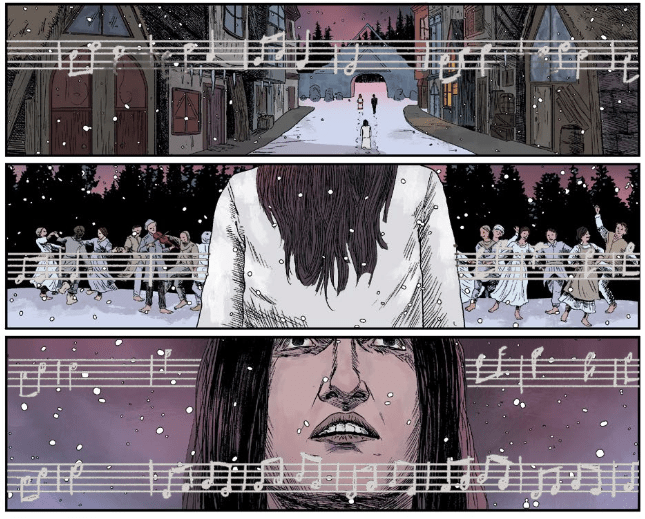
As for why it’s a good place for the marriage between genre and more “literary” ideas, I think it’s down to the simple fact that comics are the marriage of word and image. But I’d also say comics is one of the few mediums where the line between high art and low art is blurred. Ed Piskor is a great example of someone who is currently making “low art” in his exploitation comic, and yet his artistry is unparalleled from a technical standpoint. Rather than try to explain this anymore I think it would be better for people to see what I mean, and to do that I’d recommend reading Dave Mazzucchelli’s adaptation of Paul Auster’s City of Glass.
Why do you think the ‘medium-press’ is a good place for these high-quality, genre stories?
LN: Because of the freedom they afford their creators. There’s less risk on their part because the customer base isn’t expecting anything and so in paying less money for more passionate stories from creators, the work is, in theory, more engaging because it’s fresh, innovative, and daring. I hate to keep comparing comics to the film industry, but it really is similar. You don’t have major studios producing the best, most cutting-edge pictures anymore. You have boutique studios like A24 and NEON who can offer smaller budgets but more creative freedom. That has been and forever will be the best place for high quality genre stories to exist.
For you, at least, do you view your indie work as a stepping stone to higher-profile work-for-hire writing (like Marvel or DC), or is your ultimate goal in the comic industry more along the lines of what Rick Remender or Ed Brubaker have achieved in their exclusivity deals with Image and large fan bases?
LN: I think I used to think of it that way. Writing for Marvel used to mean everything to me, but now that I’ve worked for them and having matured as a storyteller and business person, I see my creator owned work very differently. I value it far more than I could ever value books at the big two, strictly based on the fact that I own the IP for those stories. They are mine, through and through, and they live or die by me and me alone (along with the creative team). So, now, ultimately, I do look to creators like those you mentioned along with others like Jeff Lemire, Matt Fraction, Robert Kirkman, Brian K. Vaughn, and even older ones like Alan Moore and Neil Gaiman, as the ideal of what I’d like to accomplish. Having the freedom to tell the stories I want to tell without limitations and to be paid a reasonable amount for it is the goal, a simple one, but harder to achieve than it may seem.
Mainstream comics, let alone indie books, are not exactly a super-lucrative industry. What do you think working with such slim margins and low profits says about the people who write and draw for these books, as well as the people working for the small publishers? Is the lack of money important to the vibe of the work, in your mind?
LN: Don’t I know it. What this says is that people who do it despite the horrible pay, lack of benefits, and constant anxiety of whether or not you’re going to be able to pay your bills in six months is that they do it because they love it. If they didn’t, they would have quit a long time ago. In my experience, the only time the lack of money becomes a problem is when companies don’t pay on time. I may not make a whole lot for writing a single issue, but it’s generally enough to cover expenses, and when publishers are months late on payments, it really fucks up the creator’s personal lives, and in turn the work suffers. Late payments are a huge problem in the industry right now. So many publishers operate on this idea that the work itself should be payment enough. Unfortunately, we can’t pay rent with exposure or complimentary copies of the books.
Do you think that the way the majority of comics are made, marketed, and produced ( ie: Big two comics being pushed monthly through Diamond print-wise, and these publishers flooding the market with 30+ titles per month) is a good way to do things, or is it going to ultimately prove hurtful for the industry? What do you think the ‘right’ way to produce and distribute these books would be?
LN: I have no crystal ball so I’m not sure. As a freelance employee of one of the aforementioned companies, I also don’t think it’s in my best interest to begin commenting on their business practices. I wouldn’t consider myself an expert in economics or marketing either, so anything I say would, again, be speculation. I can say that having distribution monopolized is probably not a good thing in the long run because anything where all power is given to a single organization is always dangerous, especially if you ask me, a socialist-cum-anarchist like myself.
Is dividing the industry into self-published stuff (small press), medium-press publishers like Aftershock and Vault, and mainstream comics (Marvel, DC, some Image and licensed stuff) a fair way to look at things? Or is it more complex than that?
LN: That sort of ignores several important contingencies of the industry and its various markets. It doesn’t account for companies like Drawn & Quarterly or Fantagraphics, whose books do much better than these medium press companies when you’re not looking at the direct market. Then, there’s also book publishers who only release to the book market, which account for far more sales than anything in the direct market as well. Then there are the teen and children’s graphic novels, which are a whole other can of worms. If you ask me, the book market is the future of the industry and I think we’ll start seeing a lot more publishers veering toward that route.
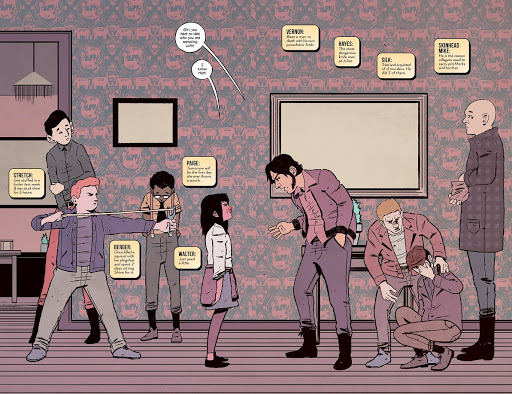
Do you think recent folding of the Vertigo imprint, one of the longest-running and most-successful ‘alternative’ comics publishers, is indicative of a shifting focus away from this particular type of story-telling, or is the failure more indicative of poor business rather than declining interest?
LN: It’s hard for me to answer because I think the only people who really know are those who worked at Vertigo and the executives at Warner who made the call to close the imprint. Anything else would just be speculation, which is a dangerous game that I hesitate to play. I think perhaps, if anything, it indicates a shift on that particular company’s part, but I don’t think you can look at one imprint, regardless of how successful and influential it was at a time, and say it speaks for an entire industry. From my point of view, there’s never been a better time for creator owned comics. The issue isn’t a shifting focus, but a widening divide between creator owned independent publishers, and those that deliver licensed superhero stories. In a sense, it’s no different from what’s happening in the film industry.
A lot of people talk about Kickstarter and other crowd-funding platforms as a new saving grace for indie-comics that are really creator friendly. I’d argue, though, that these crowdfunded comics are generally a much lower quality than any book you’d find from even the smallest publisher, and that the gatekeeping that the indie-publishers provide are a good thing for the industry. Where do you fall on this? And what about how specifically in comics, crowdfunding has become associated heavily with groups like comicsgate?
LN: I’m not sure I agree with your first statement. I’ve seen and backed plenty of comic book projects on Kickstarter that I would say are far better than what some publishers put out. A perfect example of this is Mirenda by Grim Wilkins, which is one of the best books in recent memory. It was Kickstarted first and then later picked up by Image. Or pretty much anything Abby Howard or Ryan Lindsey or Ryan King do. Sure, there are plenty of bad projects on Kickstarter, but there’s a lot of bad comics everywhere, whether in traditional publishing or self-publishing. I would say I don’t think publishers discourage enough people, if I’m being completely honest. In the end, I don’t think the chosen route matters all that much. I believe, generally, that good work finds its way of rising to the top and stands the test of time, while the not–so-good stuff sinks to become forgotten. It’s always been that way and if I don’t put faith in that idea, I’ll go insane.
What’re some of your current favorite or lesser-talked-about indie comics?
LN: Most of the books Ahoy! are putting out right now are particularly great. I think what they’re doing over there, slowly building an audience based on the highest caliber of writing and drawing, is smart. Nothing flashy or gimmicky. Just good books. Ice Cream Man isn’t particularly lesser known but more people should be reading it than there are. It’s the best ongoing horror comic in years. Coffin Bound is another one that’s flying way too far under the radar. Dead Dog’s Bite by Tyler Boss was unfortunately just put on hold as a result of COVID-19, but I’ve read the first two issues and it’s brilliant. My wife also recently introduced me to Uncivilized Books and their entire catalog is great.
…end of interview…
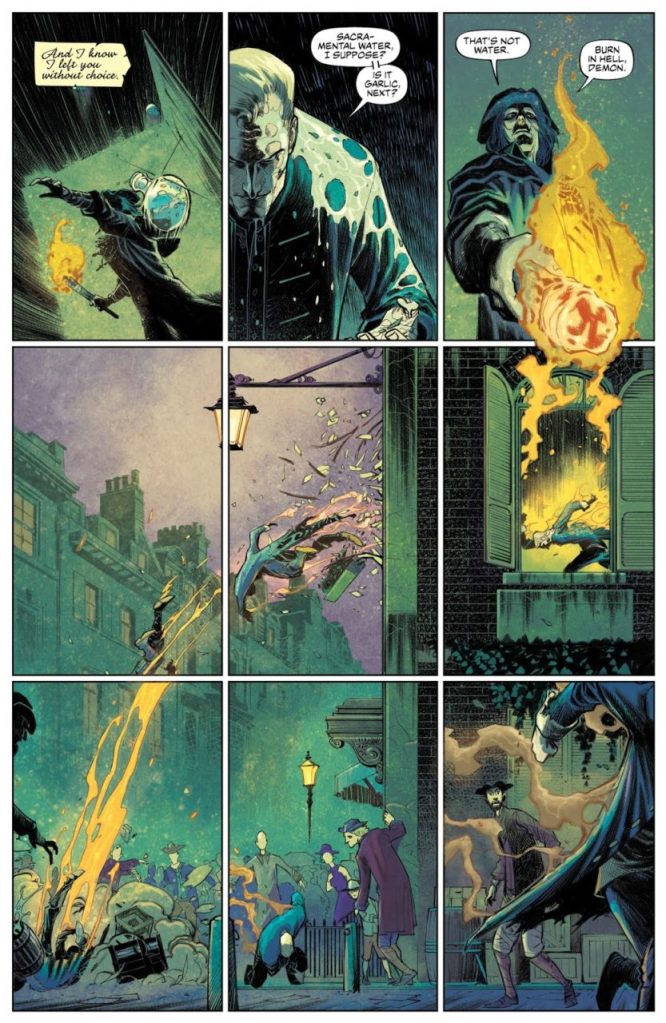
So maybe labeling a ‘medium-press’ in comics isn’t totally fair. It excludes the entire realms of literary OGNs, cartoonist’s work, and YA comics – none of which are a part of the alternative genre-fiction scene that my medium-press theory is primarily concerned with, but are a major portion of the industry nonetheless. The scene, though, is definitely thriving, with work by Lonnie and other creators like Ram V and Mark Russel making big waves even in mainstream media. The parallels that can be drawn to indie film companies like A24 are obvious. In no other lanes of their respective industries are such weird, literary-yet-still-genre-focused stories able to be created. Watch Hereditary, then read These Savage Shores. The arthouse-horror vibe in both of these are incredible, as are the works themselves.
Operating on such small margins budget-wise, these indie books’ continued existence are by no means a given, especially with the current direct-market crisis happening due to COVID. It’s possible that one or many of these small publishers don’t survive this crisis, and even that the entire industry may be affected long term. Like Lonnie said, though, this type of underground, high-quality storytelling will survive: No matter the publishing or distribution situations – the good work will rise to the top.

 airquotes