Once Upon a Time in Hollywood is a film that writer/director Quentin Tarantino seems to be daring you to not like. While a simple description of the plot sounds like a typically Tarantino movie, in execution, Hollywood feels like a non-story in the same vein as the absurdist novelists, such as Pynchon and Brautigan, that were oh-so-prominent in the same, confusing late-sixties that the film is set in. For large parts of the plot’s second act, nothing really happens. Leo’s Rick Dalton goes to work, Margot Robbie’s Sharon Tate runs errands and goes to the movies, and while Brad Pitt’s extremely tense standoff at the Spahn Movie Ranch hints at the energy of Tarantino’s past films, the uneventful way the scene ends seems as though Tarantino is teasing us as viewers. What? Tarantino seems to ask us, as Pitt drives away. Did I promise you something? Are we missing something? It’s almost boring, really, and while Tarantino is a lot of things, he is by no means boring. So, what are we missing?
The writing and acting are extremely charming, as Tarantino was surely fully aware, so why does he, as the mastermind of this beautiful, strange movie, choose to string his audience along, playing with them for two hours before the cathartic chaos of the last half hour? Even the ending, which while containing plentiful amounts of Tarantino’s trademark brutality, switches the narrative up in a few key ways that can be abrupt and confusing on first viewing. Despite his warnings before the film was released, most audiences entered the theatre for Hollywood expecting a violent retelling of the Manson murders. What they experienced, two-and-a-half hours later, was so minimally about Manson that it was disorienting. Instead, viewers were met with a goofy, uneventful, and weird buddy movie that breaks the one rule of Hollywood buddy-movies – Leo and Brad don’t even fight.
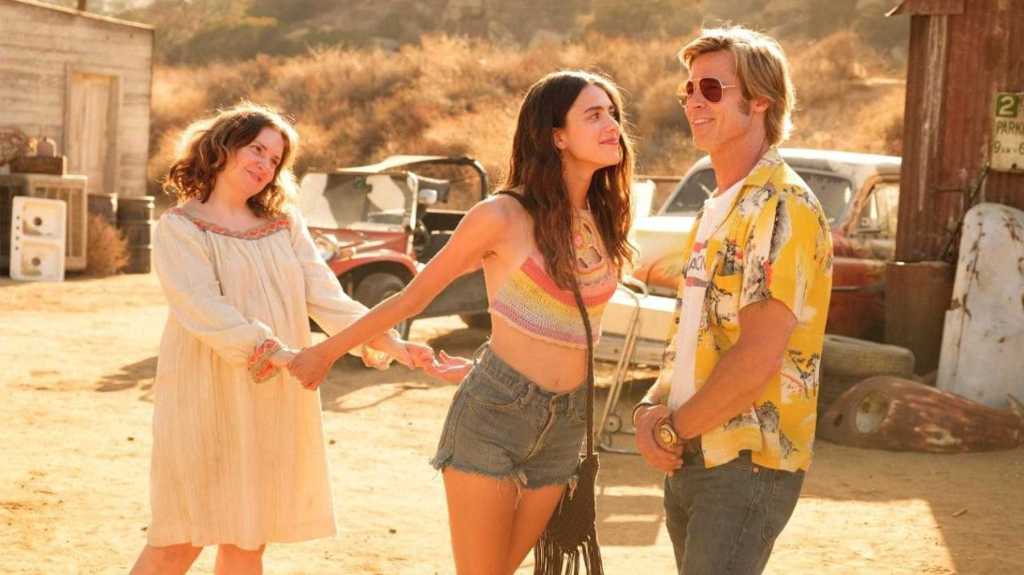
So, really, what was Tarantino’s point in this strange movie about nothing particular? Is it about aging and sadness and the ‘good-old-days,’ as some critics have put it? Or are the negative reviews better – is it just an overindulgent pat-on-the-back that allowed Tarantino to build pretty sets and have his favorite actors run all over? Probably both, to be honest, but if that’s true, then why the hell does it work so well? Hollywood could be called a lot of things, but it’s not a bad film by any means. Is the Pynchon-styled nonsense why the story works so well, or is there something else that Tarantino was able to tap into to make Once Upon a Time in Hollywood work so well – despite Tarantino’s own screenplay working against it.
For these answers, we have to leave the realm of cinema entirely, instead looking to a whole different medium: video games, and specifically, the adventure game. While Tarantino is a self-proclaimed fanatic of many pulpy, exploitation-y, and comic-book-y mediums of entertainment, videogames are certainly not one of them. In fact, compared to the lush, nostalgic oranges and blues and Hollywood’s 1969 Los Angeles, the modern video game might seem about as far from the film as possible. And while it’s true that Tarantino may not have been directly inspired by games, there’s a modern-day movement in independent game development that seems to be tapping into the same type of vibe that makes Once Upon a Time in Hollywood work so well – the walking simulator.
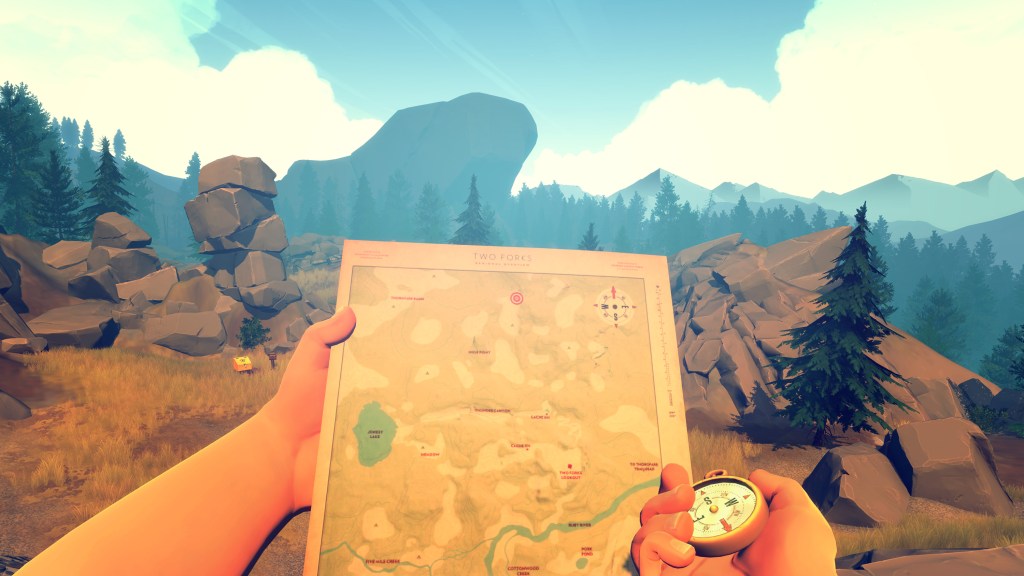
While adventure games as a genre have been prevalent in PC gaming since the eighties, with titles like the Monkey Island franchise crossing over into the mainstream, walking simulators are a specific twist on genre tropes that have really only gotten popular in the past decade. Adventure games are famous within the gaming industry for their experimental natures and focus on storytelling, and walking simulators have transformed these stories even further, adding a focus on environmental storytelling and graphics. These tweaks to the genre gave the semi-stagnant adventure game a modern-day twist and have led to many recent titles achieving high levels of critical acclaim. Games like 2016’s Firewatch by Camp Santo and Gone Home and Tacoma from the Fullbright Company have been extremely successful low-budget hits in the past half-decade and have been nominated for a handful of industry awards apiece, a feat that, considering their content, is impressive.
Unlike the majority of mainstream action or role-playing game releases, these walking simulators are characterized not by the capabilities of you as the player, but rather the opposite. Being made on low-budgets by small teams, walking-sim devs choose to limit player actions, often getting rid of player combat, mobility, and inventory options. In many cases, the only things the player character can do are walk and talk – hence the name. By focusing less on gameplay and more on storytelling and atmosphere, these devs have created a genre that isn’t for everyone, but for those who are willing to put in the (sometimes boring) gameplay time, a whole new world of fascinating and experimental storytelling styles can open up.
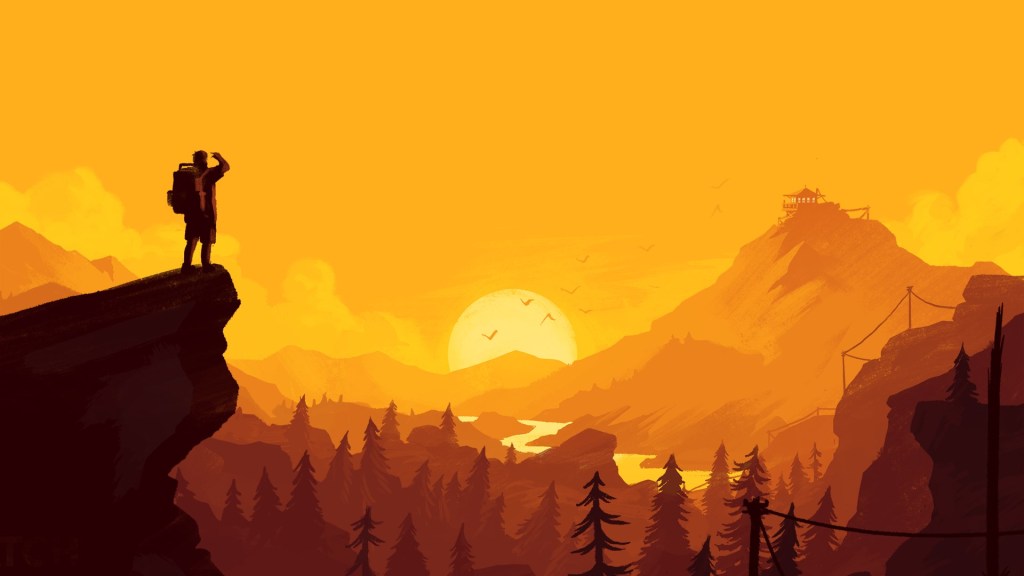
In Firewatch, you play as a park ranger, Henry, whose only in-game abilities are to explore the environment, interact with key objects, and talk to an unseen voice via his walkie-talkie. While hardly a recipe for captivating gameplay, Firewatch’s focus on its gorgeous, stylized visuals and emotional dialogue makes its playthrough a very unique one amongst games. Big-budget action and role-playing games have been capable of telling incredible stories (and have been doing so) for years now, but in a lot of ways, the stripped-down minimalism of a walking simulator can make these narratives hit even harder. Sure, the gameplay style is pretty pretentious and scares off quite a few potential players, but the sense of artistry and quality storytelling that these games bring to the table is unmatched by other genres, and raise up some interesting ideas about the future of interactive storytelling.
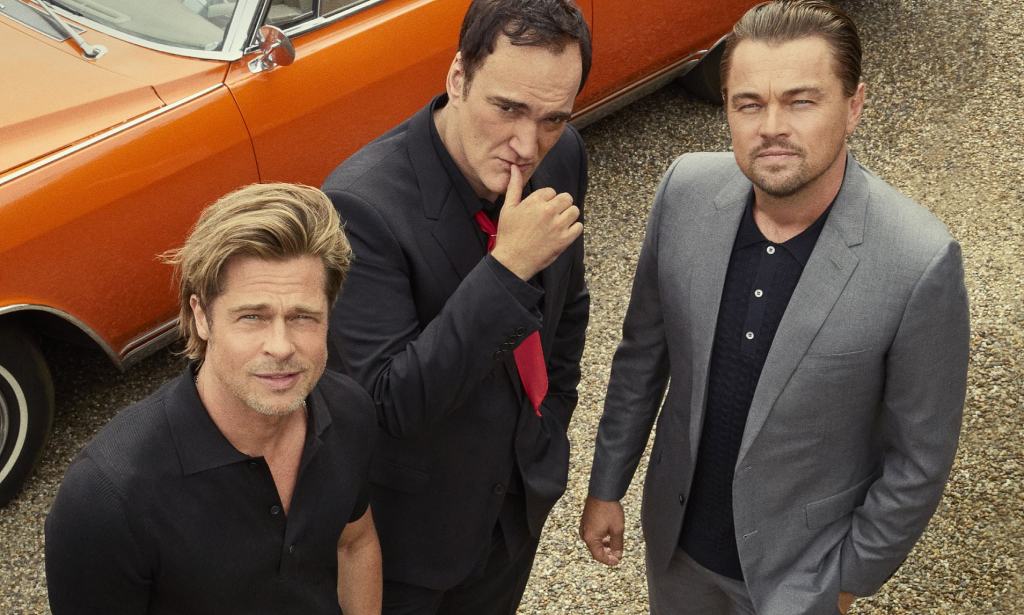
In a lot of ways, Once Upon a Time in Hollywood is a walking simulator, too – albeit one that you don’t play in the traditional sense. Like a walking simulator, Hollywood’s story is one of downtime – a so-called movie of ‘hanging-out.’ You spend a day in Rick Dalton’s shoes, and while not a lot happens, the experience gives you as the viewer a better sense for who Dalton is better than any dramatic or violent scene could have ever gotten across. You’re with these characters through the boredom, the seemingly throw-away things they say to their friends, and the little pieces of everyday joy and sadness they experience along the way. Nothing of real consequence happens, sure, but Rick Dalton’s nothing that we, as viewers, are experiencing. And, just like walking simulators, it’s the atmosphere that is Tarantino’s focus here. In Hollywood, he creates his own world, full of sets and shots that can evoke an emotion out of the most stonehearted viewer. Its Tarantino’s own little world, one that reflects Hollywood’s past and twists it, making things simultaneously more and less complex. In a lot of ways, it’s not a story of 1969 Hollywood, but a story of how Tarantino, in 2019, wishes ‘69 Hollywood would have been if he was there.
To me, Hollywood is Tarantino’s game – a small piece of a long-gone world that he invites you as the viewer to ‘play’ in. It’s not the most fun game out there, but it’s one that Tarantino as a filmmaker obviously cares a lot about, and has characters in it that you can’t help but like. Just like famous adventure games like Firewatch and absurdist fiction like The Crying of Lot 49, Once Upon a Time in Hollywood is a character study about nothing particular that, remarkably, still has something to say.

 airquotes